Chatbot versus matcher
ChatGPT Celebrity Look Alike
Asking for a ChatGPT celebrity look alike is a reasonable first instinct and a poor final answer. A chat model can describe a face convincingly, which is exactly why the guess is hard to spot.
Ready when you are
One selfie is enough. Your first result is free and nothing is stored.
Why people ask a chatbot first
You already have it open, it costs nothing, and it answers immediately. Ask it who your celebrity parents would be and you get two names, a short explanation, and the sense of having consulted something. For a party question that is often enough.
The trouble is that the confidence of the answer does not track the strength of the evidence.
What a chat model does with a selfie
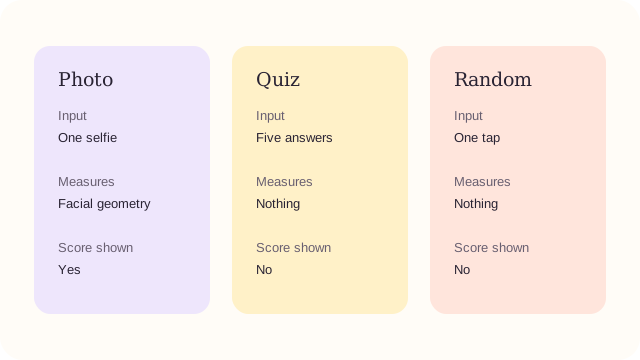
Given an image, a vision model extracts a description. It can identify that a face is long or round, that the eyes are widely set, that the jaw is soft. Those observations are real. What happens next is where the two approaches part: the model produces the most plausible celebrity names for that description, rather than scoring every candidate and reporting the best.
Where the guess shows
Three symptoms make a generated answer easy to distinguish from a measured one.
The answer drifts
Ask twice and a chat model can name different people. Nothing was ranked, so nothing is stable.
The roster is unbounded
A chat model can name anyone, which means it also has no consistent library to compare against and no way to tell you what it rejected.
No feature breakdown
You get a name and a flattering sentence. You do not get the specific measurements that produced it.
What a measured match returns
A dedicated matcher fixes both variables that a chat model leaves open: a fixed roster, so every candidate is drawn from the same list, and a fixed rubric, so the same measurements always produce the same ranking. What comes back is a pair, a resemblance score out of 100, and the named features behind the score — face shape, eye spacing, nose bridge, jaw angle, mouth line.
Running both without confusing yourself
Use each for what it is good at and do not mix their outputs into one claim.
- Want a description of your face? A chat model is genuinely useful. Ask which features stand out and it will tell you.
- Want a ranked match? Use a matcher, which compares against a fixed list and shows the score.
- Want a stable answer? Keep the photo identical between runs. Compare one variable at a time.
What happens to the photo
Uploading a face to any service is a real decision, whichever one it is. Here the photo is analysed exactly once and then discarded; it is not stored in a face library and it is not used to train a model. Check the privacy line on any tool before you upload, not after.
Frequently asked questions
Can ChatGPT tell me who my celebrity parents are?
It can produce names that sound plausible. It cannot score your face against a fixed roster, so it has no measurement to defend and no reason to give the same answer twice.
Why do I get a different answer each time?
A chat model generates a likely reply rather than ranking candidates. With no fixed library and no fixed scoring, the reply changes between runs.
Is a chat model ever the right tool here?
Yes, for describing features. Ask it what stands out about your face and it is useful. Use a matcher when you want a ranked result with a score.
Does asking ChatGPT store my photo?
Terms differ between products and change over time. Read the provider's current policy before uploading a face, whichever assistant you use.