The finder, decoded
Celebrity Look Alike Finder
A celebrity look alike finder is a search over a fixed list, not a guess at who you resemble. The word finder promises a ranking against a roster; a generator only promises a picture. Here is how to tell the two apart in thirty seconds, and what the free run of any honest one actually returns.
Sign in to unlock the full report and spend your free credit.
What a finder promises, and what a generator does not
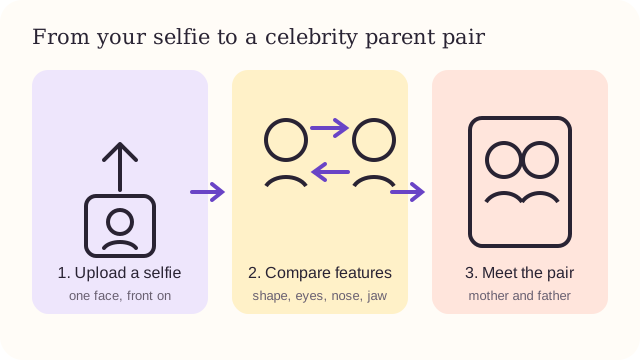
A finder implies a search: you supply a face, it searches a list of famous faces, and it returns the nearest one. A generator implies a draw: it makes a face or a couple rather than finding one that already exists. The difference is the gap between a ranking you can check and a picture you cannot.
Most pages that call themselves finders are still drawing. The word on the tin is not a guarantee, which is why the thirty-second check matters.
The thirty-second check before you upload
- Does it name a roster? A real finder can tell you which list of faces it searches. A generator cannot, because there is no list.
- Does it show a score? A ranking has a number and the features behind it. A guess has a name and a flattering sentence.
- Does it say what happens to the photo? A finder that keeps selfies has a different risk profile from one that discards them.
Thirty seconds on those three lines tells you more than the landing page ever will.
What a good finder states upfront
- The roster. Which faces are in the list, so the comparison is like for like.
- The measurements. Which features are scored, so the result can be argued with.
- The free tier. What the free run returns, and what sits behind the credit.
- The limit. That it is entertainment, not an identification or a family record.
A finder that hides any of these four is asking you to trust it instead of check it.
What the free run actually returns
The free run returns two names: the closest single famous face, and the first parent pair. Everything that explains them — the score, the feature breakdown and the alternate pairs — sits behind one credit, which is about $2.99, and a new account starts with one credit free.
That is enough to judge the tool. A free run that names a face and shows its working behind a credit is a search; a free run that names a face and explains nothing has a name and a flattering sentence.
When a finder is the right tool, and when it is not
If you want one name — the famous face closest to your photo — a finder is the honest shape of tool. If you want a story about a family, you are asking a two-parent question, and the page that answers it is who are my celebrity parents.
Keep the two questions separate and you will not read a pair as a single look-alike wearing a second name.
Try the finder on your own photo
Upload one front-facing selfie and read the closest single face and the first parent pair for free, against a fixed roster of famous faces. The score and the feature breakdown open with one credit.
Frequently asked questions
What does a celebrity look alike finder actually do?
It searches a fixed list of famous faces and returns the nearest one to your photo, with a score and the features behind it. A generator, by contrast, makes a face rather than finding one.
Is a celebrity look alike finder free to use?
Here the first analysis is free and returns the closest single face and the first parent pair, by name. The score and the feature breakdown are behind one credit, about $2.99, and a new account starts with one credit free.
Why do two finders give two different faces?
They compare different feature sets against different rosters. Change either the library or the measurements and the nearest face changes with them.
Can a finder identify who I really am?
No. It compares your photo against public faces for entertainment. It cannot identify you, and it knows nothing about your family.